The 6 Reasons People Leave Negative Steam Reviews
12 weeks ago
You are viewing version 4 of this letter. Jump to the latest version
Negative steam reviews help designers find where their game isn’t working. I’d hate to only find out about an issue after the game is released. Luckily, negative reviews tend to take on six similar shapes. You can see the beginnings of each as early as a demo made in a week. I’ve been working on a demo of a spycraft game. You live in dossiers and secrets, plan where to apply leverage and how to gain access, and master agent handling.
I’ve looked at where my demo trips over itself delivering on its promises, some steam reviews of games with similar problems, and how I might solve the issues before release. By the end, player feedback should fall neatly into known categories whose solutions are obvious immediately.
Games promise a set of ways to have fun, such as getting to explore or to master or to compete. Negative reviews happen because the action-to-promise chain breaks down. Players feel shortchanged, and often angry. Then they leave a negative review.
A Tree Falls in the Forest
Tourists visit a national park. A local guide tells them they can come watch an old growth tree fall if they cross this bridge.

You are the local guide, your game is the bridge, and the tourists are your players. Six different negative reviews are published about the event. Let’s look at their shapes.
A Missing Link in the Action Chain
Your chain of actions has a missing link that keeps the chain from delivering the promise. The tourists wanted to watch the tree fall but the bridge to get there is out.
Originally Case Officer was going to be about deciding what intelligence to share and to withhold from Washington. If you planned well, achieving your objectives would be easy despite damning intel. You don’t want Washington to know your best source has gone rogue, they’d pull your funding. The stated objective IN the demo is to stop the country you’re assigned to from passing security funding. You achieve this by discovering who is the swing vote by having access to the palace through your agents. You do that by having dirt on or money for the people with access. The issue was that passing along “Morales is the deciding vote” won you the game, as that’s good enough intel for Washington to act. That frustrated me, as the goal led me to believe that _I_ was the one who would act to stop the security funding through the blackmail and favor system.
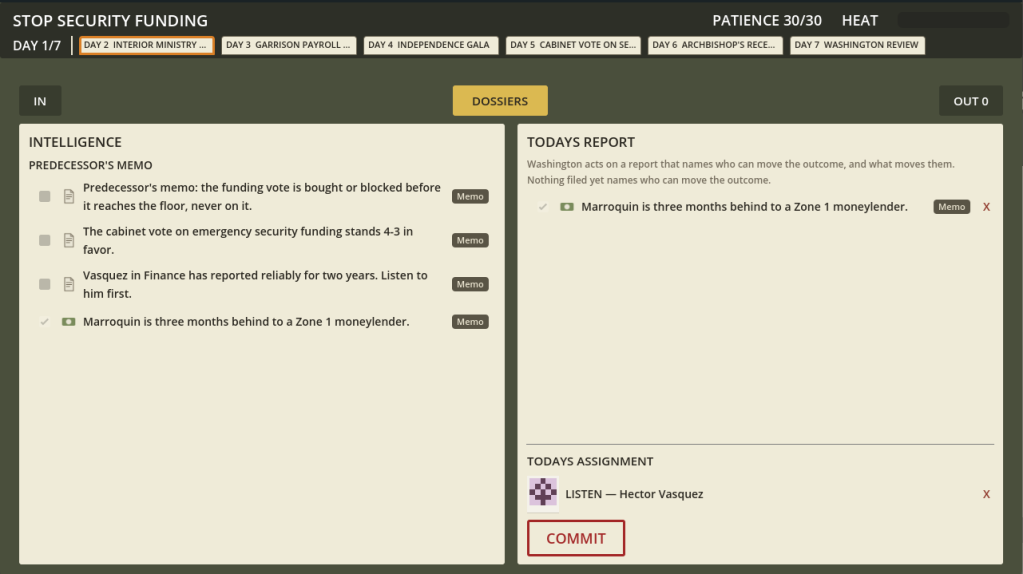
So the break in the chain as it exists might be:
Gather money -> decide who to bribe for palace access -> gather palace intel about voting habits through agents -> report swing vote to Washington -> ? -> promise of Strategy fulfilled.
Realizing Washington took it from me made me give an audible “yuck!”. There were missing links in the chain that denied me the promised strategic gameplay. The final links in the chain might be:
Report swing vote to Washington to receive support -> shadow the person with the deciding vote for dirt -> blackmail voter into blocking the security funding -> Promise of strategy fulfilled. Now intel isn’t the deliverable but ammunition for achieving your goals, as planned.
Let’s look at a negative game review that implies a break in the chain. We’ll look at Civilization 7.
In Sid Meier’s Civilization® VII, every strategic decision shapes your empire’s unique lineage. Rule as legendary leaders from throughout history and strive for unique victories by choosing how your civilization changes or persists across each Age of human advancement. Grow your territory with new Settlements and architectural Wonders, spur advancement with technological breakthroughs, and conquer or cooperate with your competition as you explore and expand into the world’s far, unknown reaches. Pursue prosperity in an immersive solo experience or play with others in online multiplayer. Whether you follow a path rooted in history or chart your own way forward, build something you believe in with Civilization VII.Civilization makes a couple promises:
Choosing how your civilization changes / choose history or your own way -> Design
- Choosing how your civilization changes / choose history or your own way -> Design
- Grow your territory -> Power
- Every strategic decision -> Strategy
Conquer … your competition -> Competition
Explore … the world’s far unknown reaches -> Discovery
Immersive … rooted in history … legendary leader -> Fantasy / Immersion
Unique victories -> Challenge and Completion
A satisfied player of Civilization 7 might say they felt powerful as they immersed themselves in history. They competed well and finally nailed all the difficult victory types thanks to their clever planning. Each session was filled with cool things to discover. And they did it _their_ way.
The review does not tell that story.
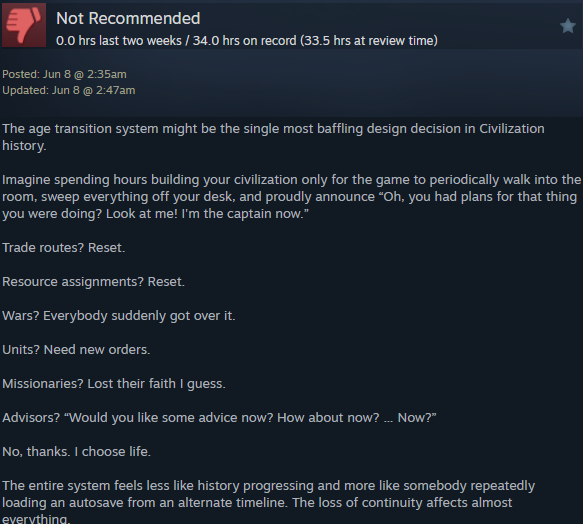
One of the user’s chief complaints is that their unique civilization they decided on was being reset by age transitions, undoing all the power they had accumulated. The user might articulate that the game broke the chain that would have allowed them to complete the promises of power and design. The promises were violated.
Civilization backpedaled on this design by allowing you to keep you civilization across ages and reduces the amount of game resetting that happened across ages.
Visibility of a Link in the Action Chain
Your chain of actions is not missing a link but your players believe it is missing a link. The tourists know the tree is bound to fall, but they can’t find the bridge to get there.
When you boot the demo you’re told your mission is to stop the security funding. I designed the events in the game to change who knew what based on access, but that wasn’t clear in the interface. Who is useful is opaque because it was hard to flip back and forth from event info to dossiers listing access and to know what events provide what when.
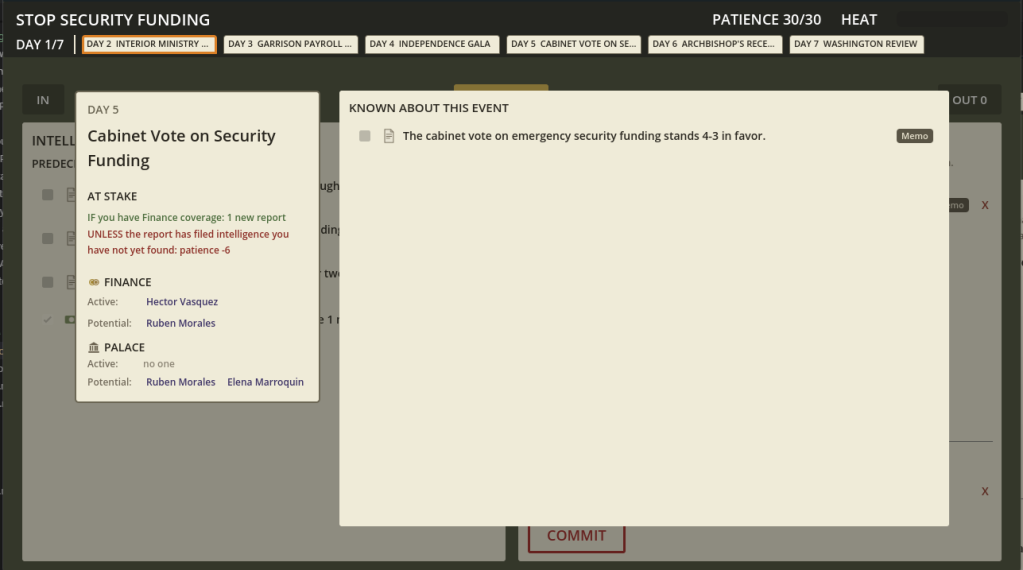
There was such a dearth of information that player choices felt random. I solved this issue by adding the “stakes” of the event and a list of potential agents with access to the event screen. Now the player is aware of what they might gain from having what agent each day. Suddenly the way to arrive at the win condition is apparent.
Lack of Identification with a Link in the Action Chain
Your players know what action they must do but do not want to do it. The bridge to the tree is too rickety or gross to be worth crossing.
One of the primary things I was testing with the Case Officer demo was whether I vibed with the minute to minute actions of being a case officer. Case officers handle paperwork and filing all day. Telling someone to “find the fun” in this space might read as a joke. No, the value of handling paperwork has to be seated in the significance of the paperwork. Signing a paper that consigns a million to death might make your hand shake.
The difficulty of fighting games is a deterrent to newcomers. They like feeling powerful and designing their playstyle, they even like that its challenging to win. Players often draw the line at the utter minute to minute challenge of learning to input a pretzel motion on a joystick.

Is this such a bad thing? Mastering the confusion and difficulty from the breakdown of the chain is a part of the fun. To make each chain of actions clear, easy, direct might keep mastery, one of the main sources of meaning for long playtime games, from manifesting.
That same Civilization review argues just that later on. The “Magic Button” Civ 7 introduces automates the player away. They _didn’t want_ clear, direct, easy gameplay.
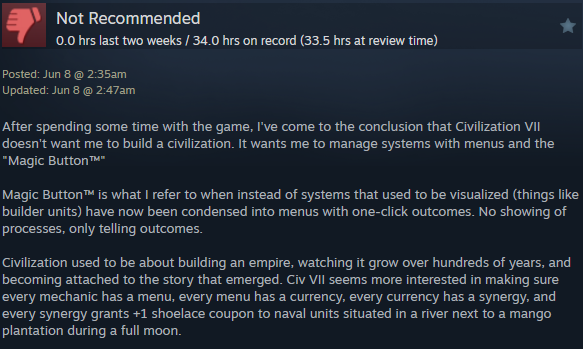
Still, a particular task being so bad your players set down the game is worthy of pause. Can it be streamlined, made juicier, easier to understand, deeper?
Lacking a Promise
Your chain of actions doesn’t lead to a promise. The tree never fell and the tourists wonder why they crossed the bridge.
In my game, there are more facts than are useful. If they don’t pick up the facts that lead to ‘winning’ the case, then they might feel facts are pointless. Lacking a promise deadens all actions that come before it.
Let’s look at the hallmark case of a game lacking a compelling promise: No Man’s Sky.
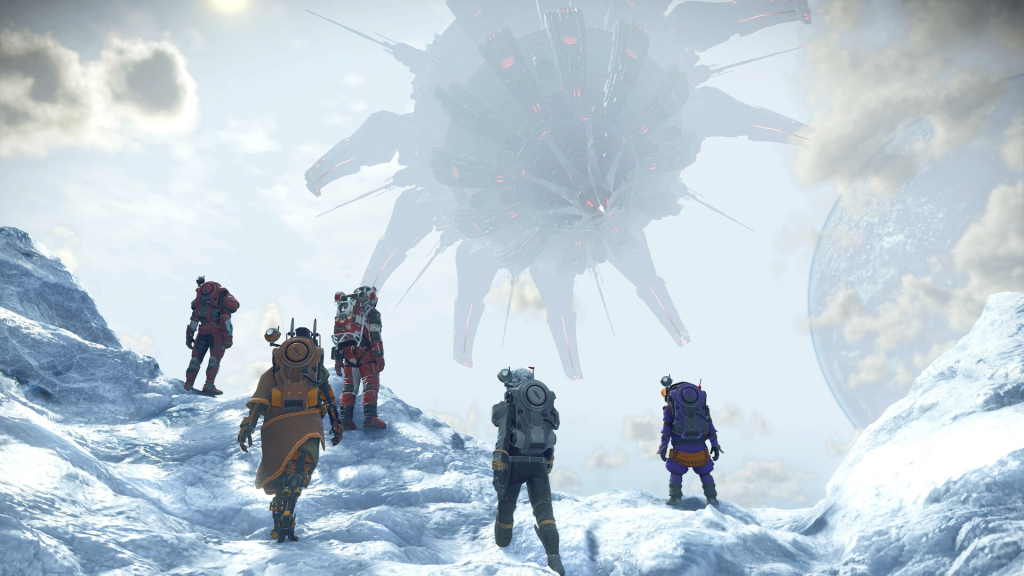
No Man’s Sky is a game about exploration and survival in an infinite procedurally generated universe.No Man’s Sky makes two promises:
- Explore an infinite universe -> Discovery
- Survival -> Strategy
The game was hyped beyond belief, but players were disappointed by the nothing burger of the actual gameplay at launch.
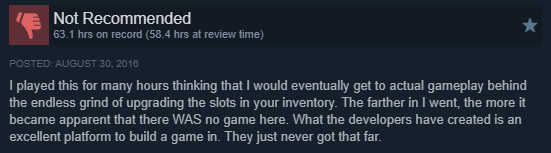
There were no mechanics supporting the survival and discovery. This feedback came after release, but not too late for the developer to act on. They implemented a number of mechanics that could support their game’s promises. You can see the day the patch released by the number of positive reviews. From then on the game reviewed well.

Here’s an example review from the day of the patch:
 Adding ship and base management, multiplayer, and things worth discovering was enough for this player to feel like they got what was promised. Negative reviews are not necessarily fatal. They are useful autopsies of the current state of your game you can use to improve it.
You must dare to say what your game is about to make a promise. Not making a promise makes your game a toy, not a game.
Visibility of the Promise
Your chain leads to a promise but the player is unaware of the promise. The tourists turn around halfway across the bridge because they are unaware the tree is about to fall.
Let’s look at Crusader Kings 2.
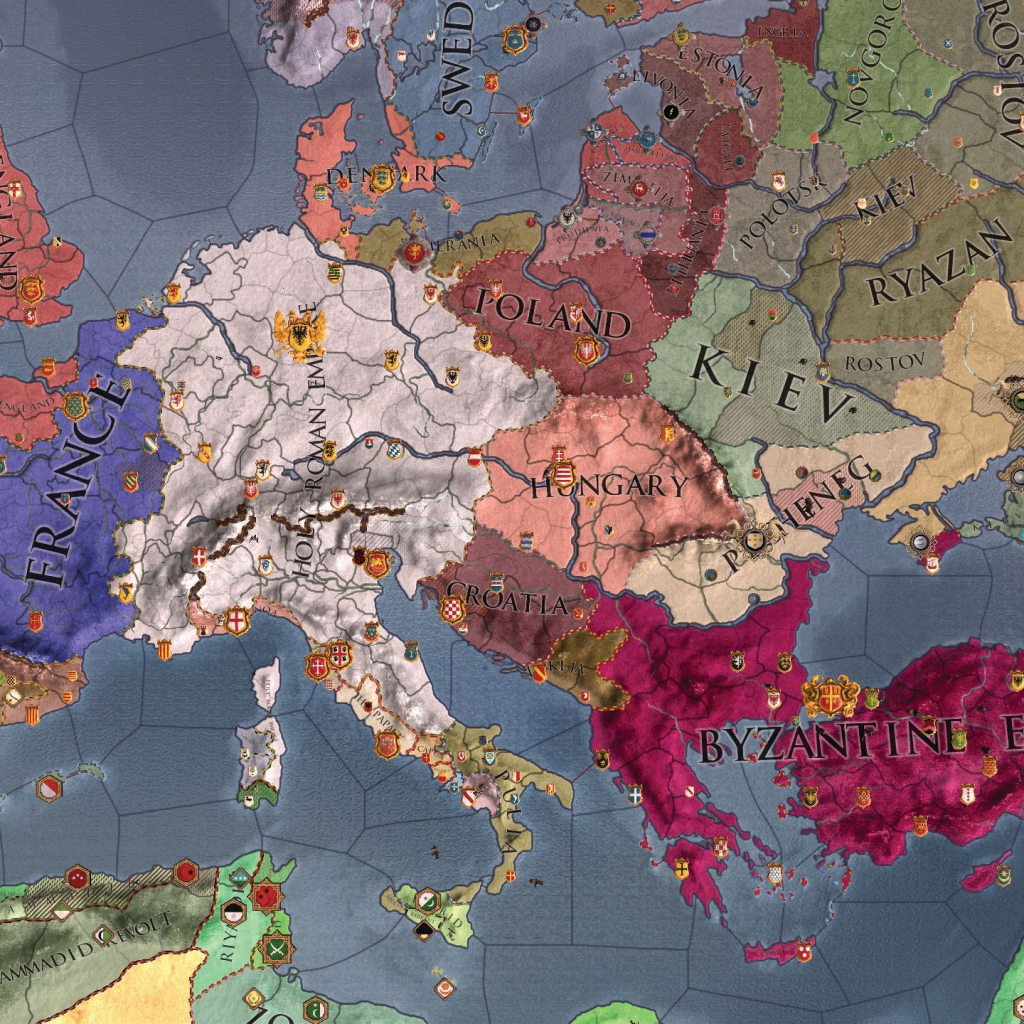
Rule a medieval dynasty one mortal at a time: expand your lands, appoint the ambitious, scheme past the loyal-for-now, and root out the plots forming in your own hall before they reach your bedchamber. Every friend you buy, rival you break, and law you force through outlives you — so raise an heir worth the crown you’ve stolen, and die knowing the family name is whispered from Ireland to Cathay.You will feel powerful, master scheming, plan who to appoint, and become a crusader king.
Here’s a tongue-in-cheek negative review of Crusader Kings II. The reviewer cannot see why the game would be fun.
They show the guide to how to play the game on the forum and scroll the text for 20 solid seconds to show just how buried the promise is.
Lack of Identification with the Promise
Your player knows the chain of actions leads to the promise but they do not want the promise. The tree falls but the audience wanted birdsong not treefall.
Taste is a trainable ability where you say “that person will like this” while being right most of the time. The corollary is you must decide who you think will like the thing and then pitch them to get their verdict. You do not own their response, but you do choose your game and your audience. Case Officer was built, in part, so that I will like it, but I’ll need to share it to see if my target audience likes it.
Let’s consider Stationeers.

Stationeers puts you in control of the construction and management of a space station to run by yourself or online with your friends. Complex atmospheric, electrical, manufacturing, agriculture, and gravitational systems require your thought and management at all times!I tried to get my friend to play this game with me, but they bounced off it hard. They called it a “HVAC Certification Simulator”.
Not all feedback is created equal. If you aren’t making the game “for them” then their feedback may lead you astray. People are multifaceted, and prefer different kinds of games. Sometimes your chain of actions is delivering on its promise but the player doesn’t care for it, or actively dislikes it.
The Grid of Bad Reviews
That leaves us with six different kinds of reviews and six ways to fix your game.
Missing tends to read as angry, hidden as confused, and unwanted as indifferent or begrudging.
Where this System Fails
In looking through negative reviews for this topic I came upon many reviews that didn’t seem to fit this mold. Translation issues, predatory monetization strategies, simply being expensive, the CEO saying something scandalous, AI use, and the like. These might be shoehorned into the six categories but I’m not sure. It feels like there is another exterior layer that includes things like personalities, delivery, and logistics. A dead multiplayer game isn’t even broken. You could revive it with enough player interest. So is it really a failure of promise if you can’t find a match?
Conclusion
You made it across the bridge and now you get to watch the tree fall.